


Helps w/ Recovery
"Excellent taste and mixes easily. It helps with recovery from workouts."


Earn 54 loyalty points with this purchase.
We've got your back FOREVER, no matter what. Whether it's been a day or a decade, you can exchange your product anytime, anyplace, and for ANY reason.
It's transparency your way. With just a click on your mobile or desktop, you can easily check the test results of your supplement bottle.
All of our supplements are held to the highest quality and purity standards, verified through rigorous third-party testing to ensure label accuracy.
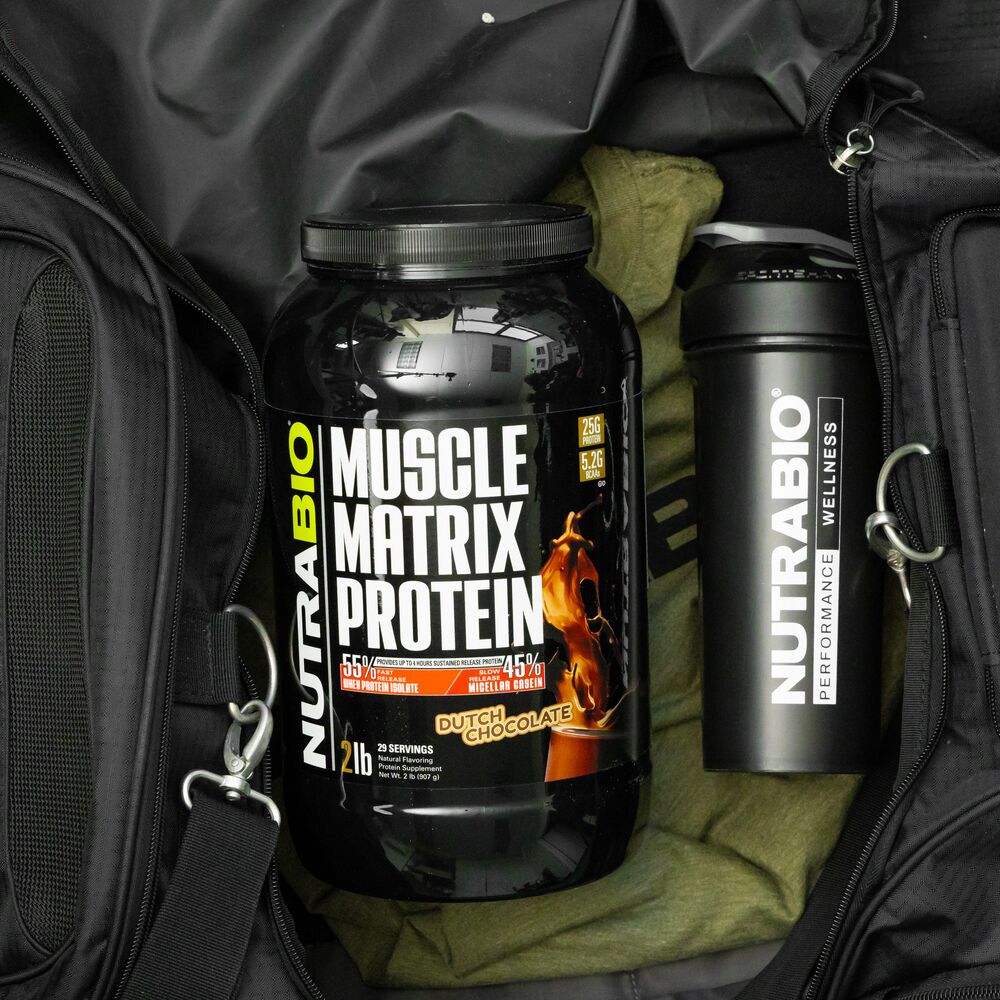
Supply your muscles with the most advanced blend of whey isolate and micellar casein to provide muscles with the fast and slow-digesting amino acids necessary to support recovery.
 Alpine Vanilla

NUTRABIO QUALITY GUARANTEE
Made in the USA • Third-Party Tested • Fully Transparent Labels • Fully Dosed Formulas
Supply your muscles with the most advanced blend of whey isolate and micellar casein to provide muscles with the fast and slow-digesting amino acids necessary to support recovery.


Overall rating: 4.8382354 / 5 from 68 reviews.
Muscle Matrix is a superior protein blend offering a mix of fast-digesting whey protein isolate and slow-digesting micellar casein. Praised for its great taste and high quality, it provides a full amino acid spectrum to support muscle recovery and growth. Ideal for various consumption methods, it helps maximize muscle protein synthesis and maintain an anabolic state.
Review topics: [quality, results, ingredients, taste, blend, protein, mixes, vanilla, supplement, whey, digestion, shaker].
"Excellent taste and mixes easily. It helps with recovery from workouts."
"Love this product the vanilla is good. And digestion is great! Love combination of the proteins"
"Very pleasant chocolate protein. Meets my fitness routine expectations. Easy to dissolve."
"I am trying to get a better amount of protein in every day. This is my mid-morning snack. It tastes great and mixes great. I know that everything Nutrabio sells is top quality and properly dosed. No worries about that."
"The best protein powder I've used clean ingredients excellent blend of isolate and casien. No stomach issue either. Have and will buy again."
"Contains the perfect blend of both whey and casein. I also like that the actual quantities of all ingredients are listed. My only complaint is that the chocolate flavor could be stronger. Also, mixes well in water, but not in milk."
"Fantastic product"
"Great product. I didn’t notice a difference between this and the normal whey isolate I get from Nutribio. I will be switching back to the normal isolate. I don’t notice any stomach discomfort with this product. It taste great, not too heavy. It does get a little thicker in a shaker, so I used a bit more water than normal. Over all it would probably benefit someone looking for a different source of protein if they had some health concerns. Just not for me."
"It blended well with another powder supplement. I wish it was in the 5lbs container"
"Great ingredients good supplements great favor vanilla delicious 😋"
Add 1 heaping scoop of Muscle Matrix casein powder to 6-8 ounces of cold water or beverage (milk, almond milk, rice milk, juice, etc.) and mix in a shaker cup. To make a creamy smoothie, add 2-3 ice cubes and put in a blender for 20-30 seconds. Vary the amount of liquid to meet your desired taste and consistency. Consume 1 scoop within 20 minutes after your workouts. Consume 1-3 servings daily as needed to satisfy your protein requirements, which are often calculated based on your body weight. Do not use it as a sole source of nutrition.
Muscle Matrix should be taken at nighttime (right before sleep) and within 20 minutes after workouts to help provide sustained amino acid delivery during the two most crucial times of muscle growth: during sleep and post-training. The slow-digesting casein forms in Muscle Matrix, supporting prolonged protein absorption.
Absolutely not. This is a myth. No scientific literature shows that eating a high-protein diet has any detrimental effects on renal function in otherwise healthy individuals.
We suggest taking one of our versions of PRE 30-45 minutes before your workout, Intra Blast during, and Muscle Matrix immediately after.
While it is possible to meet daily protein requirements through a balanced diet, some individuals find it challenging to get the 1.5-2 grams per kg/bodyweight necessary to maximize muscle growth and promote recovery. Whole food sources such as milk, cheese, and cottage cheese are excellent options for casein protein, providing additional vitamins and minerals. However, food sources may not always be convenient, which is why individuals often turn to protein supplementation as a convenient way to meet their individual protein needs.
Yes, and no. Whey isolates are 90% pure protein, while higher quality whey concentrates will be ~80% pure protein — making isolates “superior” on a gram-for-gram basis. However, both forms of whey digest rapidly and help support muscle-building and recovery goals. At the end of the day, which one you choose really depends on your goals. If you need a protein that is lower in calories and free of fats, lactose, and cholesterol, go with an isolate. On the other hand, if you need a protein that is more calorie-dense and fat-laden, which may be beneficial when weight gain is the goal, choose a high-quality whey concentrate.
Both casein and whey proteins are derived from milk during the cheese-making process. Enzymes are added to coagulate the milk, separating the curds (casein) from the whey. The curds are processed into various casein forms, while the liquid whey is filtered and dried into powder.
Casein protein supports muscle growth, recovery, and helps prevent muscle breakdown due to its slow digestion rate. Additionally, casein peptides found in casein protein may help support healthy blood pressure and metabolic health as part of a balanced diet.